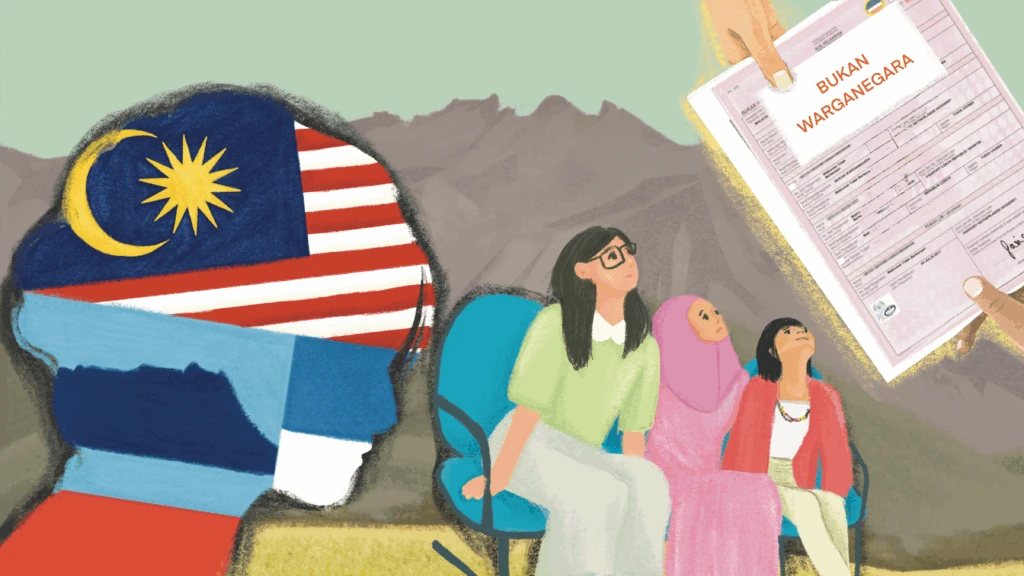
The legal stage is usually considered the end goal of the refugee and migrant inclusion. In August 2025, that belief makes for a lack of awareness of the administrative distinctions between recognition and everyday life. Having a valid status document does not guarantee facilities of housing, employment, health services, education, banking or social protection. Access to service, therefore, should also be taken account when judging democratization and citizenship, besides formal membership. The key question is whether institutions of everyday life accord protected status with a consistency and whether there are mechanisms in place of offering swift remedies when local practices or conventions and digital technology leads to exclusion.
A legal pathway as refugee is not a full picture of inclusion. Even with recognition, there may remain obstacles to access to housing, employment, health services, education, financial services, mobility and social services. Documents remain hard to verify, agencies employ different rules, and local service providers are stymied. In service-access, the entire administrative process, from eligibility to actual receipt, is considered.
Practical citizenship is formed through waiting times, the costs of traveling, language assistance, digital needs, appeal, discrimination, and data sharing. Ordinary institutions' repeated and affirming recognition of status and prompt, remedying response to instances of failure becomes a credible measure of legal inclusion.
Based on reported data, UNHCR's estimated 117.3 million forcibly displaced people at the end of 2023 is likely to reach over 120 million by the end of April 2024. Scale puts great strain on asylum systems, host communities and humanitarian institutions. Numbers however do not reflect administrative diversity. A refugee registered in one locality, can, with a common card have access to services across health, education, employment and Municipality; another refugee registered in each locality.
Accordingly, a comparative analysis should be carried out at both the level of the laws and their implementation. Achieving inclusion requires co-ordination, financial means, legal regulations and immunity from political scapegoating.
Refugee data is – by its very nature – particularly sensitive as disclosure can reveal family connections, political background, place of origin, ethnicity, or protection claims. UNHCR guidance emphasises the importance of registration, identification and protection of personal information. Consent is complicated if assistance is contingent upon consenting—and leaving untreated can have material consequences. There thus should be lawful purpose and necessity instead of a mythical concept of freely-negotiated exchange.
It is important for data-sharing contracts to specify who can use shared data as well as how much it can be stored, security measures, audit histories, and courses of action. Future changes in politics have to be taken into account as risk assessment – a database, which is safe under one administration, may become dangerous under another.
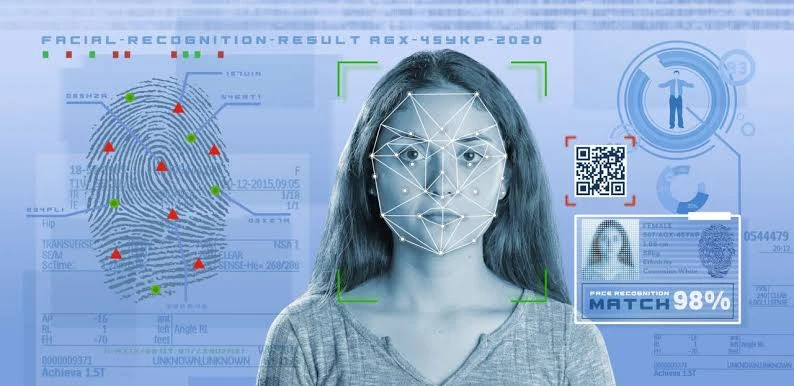
Digital identity can help lower duplication, expedite verification, facilitate on-the-go use, and facilitate access to helpful services for displaced persons. If access to the same infrastructure requires biometrics that are unreliable, devices that are inaccessible, erroneous records, or opaque data sharing, it can be even more complicated to access lawful assistance, which helps to further imply legal precarity. Exclusion, privacy, security, vendor lock-in and an inappropriate technology are identified as key risks in World Bank ID4D guidance. A rights-based approach requires data minimisation, purpose limitation, data correction, human oversight, secure authentication, independent oversight and an alternative to the digital approach. A breakdown in the technical aspects of an aircraft flight shall never be the cause of loss of food, movement, legal status and medical attention because of convenience.
Imbalance in citizenship status, where certain groups are the trusted while others are the suspected, may develop when identity infrastructure is setting up borders between the groups. Citizens, permanent residents, visa holders, asylum-seekers and those who are undocumented, often face varying protections and burdens, both in proving their cases and in receiving appeals and surveillance. While a formal legal description will account for some of this variability, formal administrative arrangements and technical designs may increase the gap. If a person has an established document, fluency in language and legal help, he can correct an error but another person can't because of the database mismatch.
A perfect level of equality means more than identical technology, however. Procedures must: include accessible notice, interpreters, counselling, irrational consequences, independent review and alternatives for individuals who do not meet the biometric requirements.
The process of institutional constraints is through independence, capacity, transparency and coordination. If a court is not truly independent and lacks an adequate leave of the way to access court remedies, it isn't very independent. Stable civil servants are still subject to loyalty tests when they are not yet in the professional part of the civil service. Election managers require the resources, safety, legal security and the public trust.
In order to enjoy media freedom, journalists need information and protection from retributive investigation. Constraints take hold when multiple institutions are able to identify, detect, delay and mitigate abuse. It also makes less likely for any one body to be captured and thus disable the entire system of accountability.
There are four levels of measurement – commitment, capacity, behaviour, outcome. The combination of Treaty ratification and capacity revealed by budgets and staffing documents commitment. Behavior can be seen in administrative decisions and enforcement patterns and outcomes can be seen in safety, access, equality and remedy. When all four are used together it will not be as if you were playing a game of false optimism.
For a country, there are two ways of doing better when there is abuse; document, or do better with some other economic change. Mechanisms are identified by following a situation over time, by making comparisons, by tracing the situation backward, and by interviewing affected communities. Data quality is also an issue since violation records may be incomplete due to official data reporting and civil-society databases focused on more visible violations while legal databases may lack information on informal settlement and intimidation.
Fundamental rights are resilient when their protection is constant; it remains steady in times of insecurity, fear and quasi-political imbalance. The trickiest situations pertain to unpopular groups, controversial speech, migrants, detainees, demonstrators and neighborhoods — so called — security threats. Equal treatment in non-crisis times provides some meager data on the strength of the constitution. Resilience is reflected in upholding, in times of pressure, due process, individualized assessment, legal counsel, review and reasoned justification in institutions.
An analysis of who will benefit and who will not is crucial, since formally "neutral" rules may have geographically concentrated effects, for people with disabilities, due to language, income, immigration status or unequal access to digital systems. Protecting rights therefore needs a doctrinal and, at the same time, an empirical attentiveness when it comes to implementation.
Basic needs should not be affected due to claims of disagreements to identity or status. Emergency health access, supervised manual verification, and temporary credentials and provisional enrollment are ways to avoid an administrative problem resulting in homelessness, untreated illness, and interruptions in schooling. Fraud controls are required for safeguards, but verification expenses should be in line with the service which it protects. Agencies should document the results of the dispute and what the ongoing system problems are. Continuity rules uphold dignity and enhance the quality of data as corrections are made via a formal review process rather than re-denying it at different service counters.
To provide for local inclusion, financial and administrative capacities and legal authorization needs to be in place. Clear guidelines and interpreters, as well as accessible facilities, trained personnel, and referral ways, are all necessary for municipal offices and front-line providers. Even national law that has pledged citizens access to documents can lead to informal rationing or document demands that vary from one place to another because of unfunded mandates. Community organizations should be able to build out-reach and feedback, and public systems to provide basic services.
The following data should be analysed using comparative research: staff, waiting time, reasons for denial, appeals and geographic variation. Durable local action on inclusion is when local institutions can provide rights without the need for exceptional personal navigation that is required in the majority of cases when this did not happen.
Longitudinal studies are possible, especially along traditionally recognized migratory pathways, enabling the tracking of recognised refugees or migrants from one service to another, instead of tracking one successful enrollment. Cumulative burden can be observed with administrative linkage, privacy safeguards, and a partnership with the community. Multiple checks of documents, multiple checks of names, address requirements, and 100% paperless procedures can exclude through attrition. It is important, therefore, to measure service access overtime and across Institutions.
Local government plays a pivotal role since factors like licensing, housing, transport systems, schools and clinics often have influence over issues of day-to-day inclusion. Providing clear local guidance and adequate fiscal support are needed to the rules of national status. While community organizations are able to see implementation gaps, access shouldn't be solely based upon charitable support. Public institutions which can directly recognise rights (as opposed to Constitution Courts), are necessary for Democratic citizenship.
For the inclusion to happen, the whole administrative chain from legal recognition to accessible access of services is required. Digital identity and biometrics can facilitate that pathway, but only in the case where there is inclusivity, security, the ability to correct and review done by humans. No refugee should be irretrievably labelled as a refugee because of a failure in technical issues, neither should anyone be repeatedly placed in situations to which he or she has no entitlement for fear that he or she may be recorded as a refugee. Democratic citizenship is evaluated as much by what happens at regular points of contact, as by what is promised in the constitution.
When the new rights increase, and the consequent vulnerability does not lead to permanent surveillance, then identity infrastructure becomes legitimate. There is a need for continuity in essential services as identity issues are pending.