Advancing Justice Through Strategic Advocacy and Legal Excellence with Moral Philosophy
Advocate and legal professional with more than nine years of experience in litigation, human rights, corporate law, real estate, legal drafting, and dispute resolution. I combine legal research, case strategy, client representation, and practical business insight to protect rights, resolve complex matters, and deliver effective legal solutions.
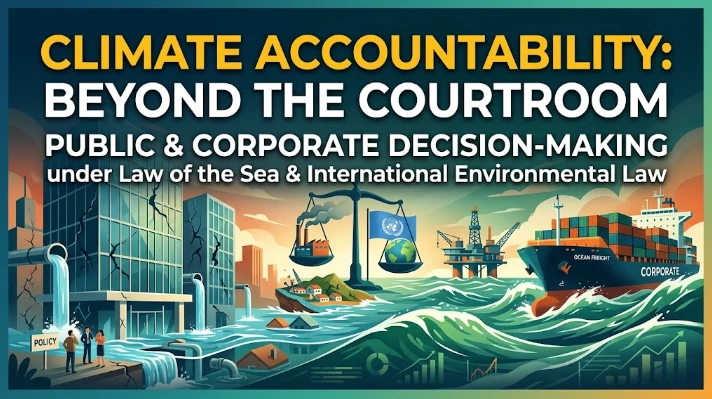
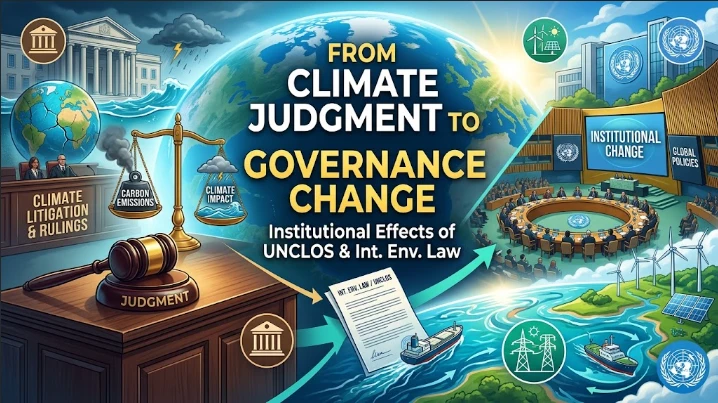
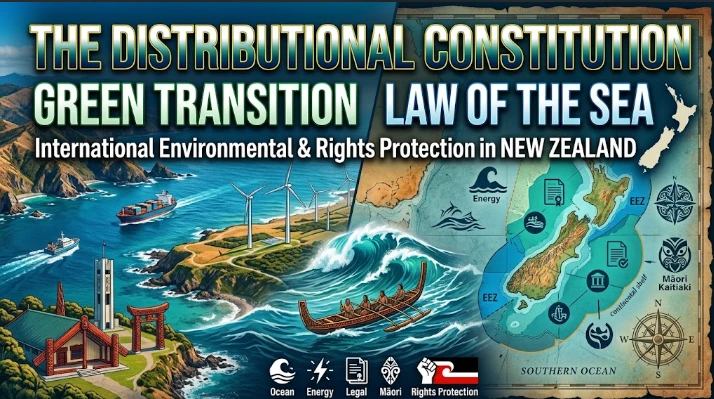
Climate accountability increasingly operates through routine public and corporate decisions rather than exclusively through litigation. This article examines how international environmental law and the law of the sea influence government budgets, permits, procurement, port operations, insurance, energy planning, investment, and corporate governance. The 2024 advisory opinion of the International Tribunal for the Law of the Sea recognized anthropogenic greenhouse-gas emissions as pollution of the
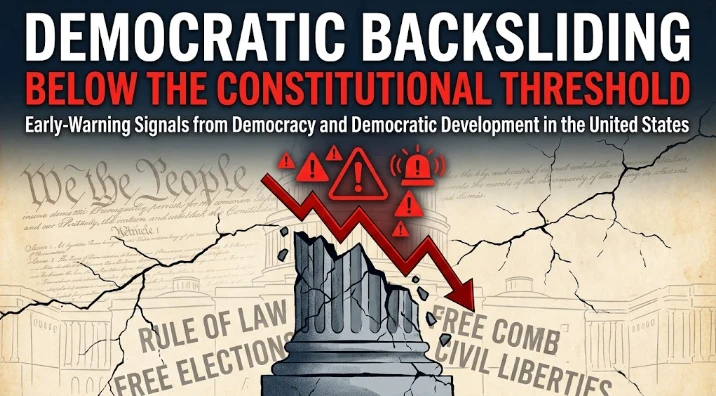
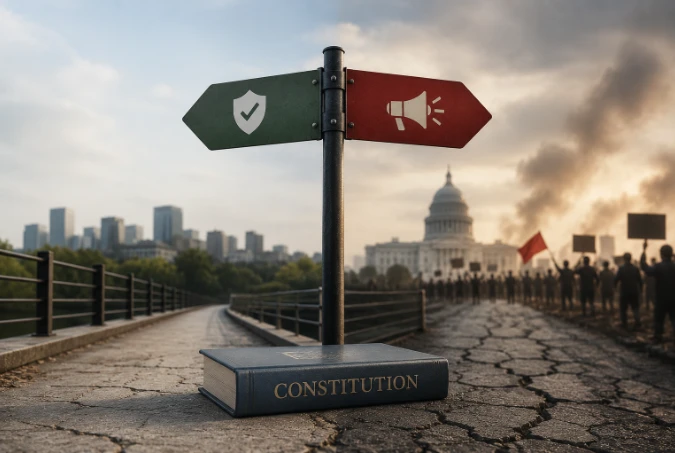
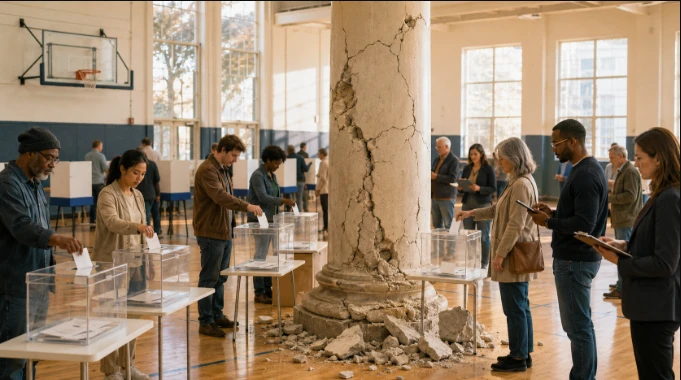
Democratic erosion often begins long before elections are cancelled, courts are suspended, or constitutional government formally collapses. This article identifies early-warning signals of backsliding in the United States while elections, legislatures, agencies, courts, and media organizations continue to operate. Warning signs include attacks on electoral credibility, intimidation of election officials, replacement of professional administrators with loyalists, selective law enforcement, weaken
The article argues that refugee or migrant status has limited practical value unless it leads to reliable access to housing, health care, education, employment, welfare, and belonging. It places New Zealand settlement policy alongside refugee protection, social rights, anti-discrimination law, and humanitarian-law considerations, emphasizing the institutions that translate legal status into services. The article highlights evidentiary flexibility when documents are lost, cross-agency coordinatio
This article presents open-democracy theory as a framework for detecting democratic backsliding before a formal constitutional rupture occurs. It describes institutional closure through reduced agenda access, restricted public records, narrow appointment processes, consultation after decisions, unequal participation, and limited explanations for official actions. The article mentions openness, inclusive deliberation, sortition, citizen assemblies, and continuing access to public power as mechani
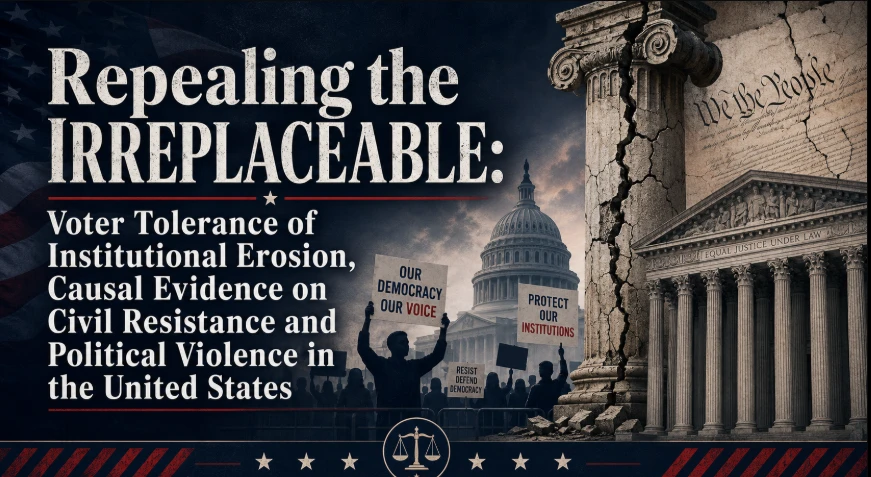
This article examines how voters may support democratic principles in theory while tolerating institutional violations committed by their preferred political leaders. It describes the influence of partisanship, political identity, fear, and perceived emergency on public acceptance of attacks against courts, election results, media freedom, and lawful opposition. The article mentions survey experiments as an effective method for separating genuine democratic commitment from reactions to party lab
This article presents an early-warning framework for identifying democratic backsliding in the United States before it develops into an explicit constitutional crisis. It describes how democratic erosion may occur through gradual administrative decisions, selective enforcement, restrictions on peaceful assembly, political pressure on election administration, and declining professional neutrality. The article mentions repeated threats against election workers, judges, journalists, legislators, an
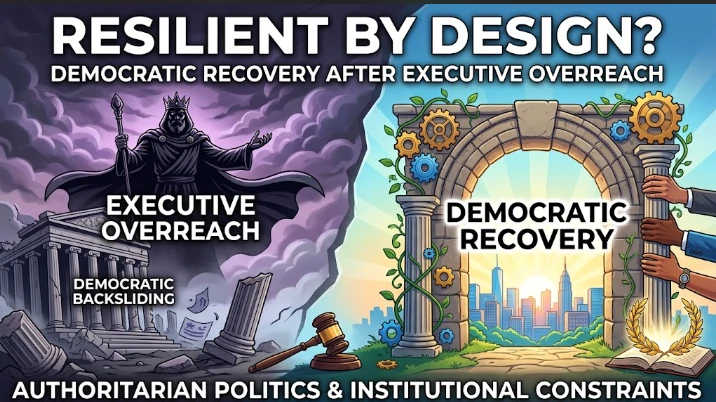
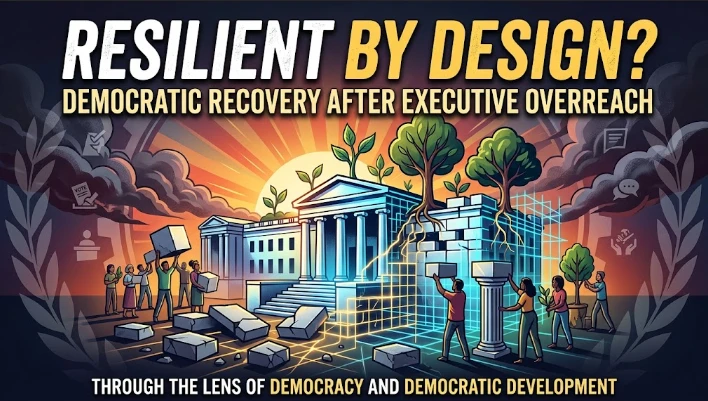
This article presents democratic recovery as a process of institutional reconstruction rather than a simple change of political leadership. It describes how executive overreach can leave lasting damage through weakened oversight, politicized agencies, altered enforcement practices, intimidated officials, and declining public trust. The article mentions civil resistance as an important mechanism for maintaining pressure for reform after elections or the withdrawal of disputed executive actions. N
This article examines how institutions learn through repeated interactions between state repression and public resistance. It describes institutional learning as a process through which police agencies, prosecutors, courts, advocacy organizations, and political leaders revise strategies after protests, legal challenges, investigations, and public controversies. The article mentions that learning can strengthen human-rights protection when misconduct produces policy reform, professional training,
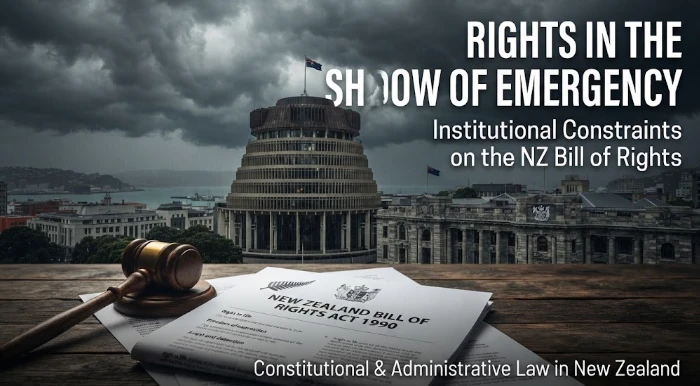
This article presents an analysis of the long-term human-rights consequences that may remain after a formal crisis or emergency has ended. It describes how temporary databases, delegated powers, procurement exceptions, surveillance practices, institutional relationships, and administrative procedures can become permanent features of governance. The article mentions necessity, proportionality, temporariness, parliamentary control, and judicial review as essential standards for assessing emergency
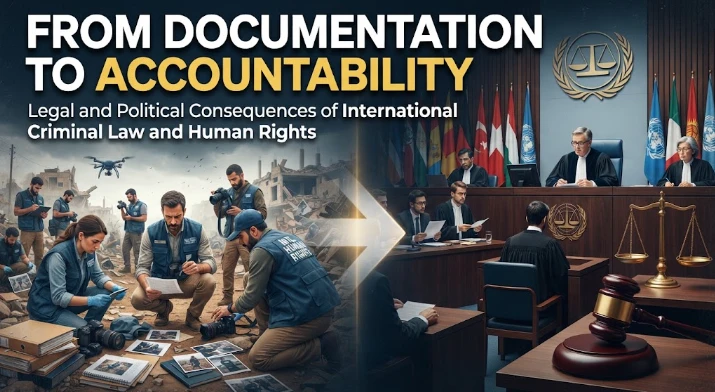
This article describes the institutional pathway through which human-rights documentation may produce legal and political accountability. It explains that evidence collection is only the beginning of accountability and must be followed by verification, preservation, attribution, legal interpretation, victim protection, and institutional action. The article mentions the opportunities and risks associated with digital evidence, including metadata verification, manipulation, unsafe storage, uncontr
This article examines policing as a central component of democratic recovery after executive overreach. It describes how authoritarian practices may continue through political surveillance, selective enforcement, discriminatory crowd control, weak disciplinary systems, and pressure on prosecutors even after national leadership changes. The article mentions accountability, neutrality, necessity, and proportionality as the principal standards for distinguishing democratic policing from politically
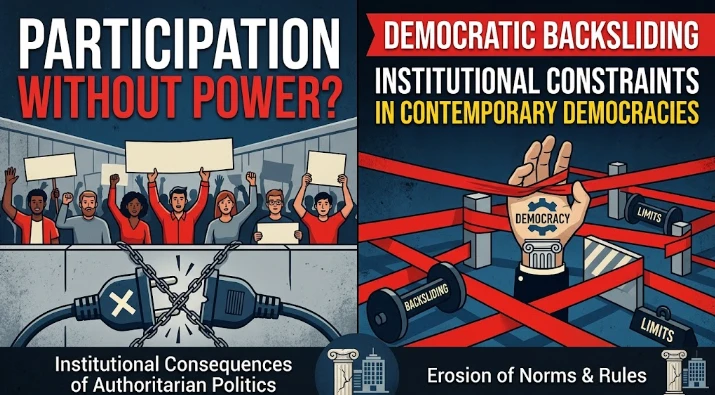
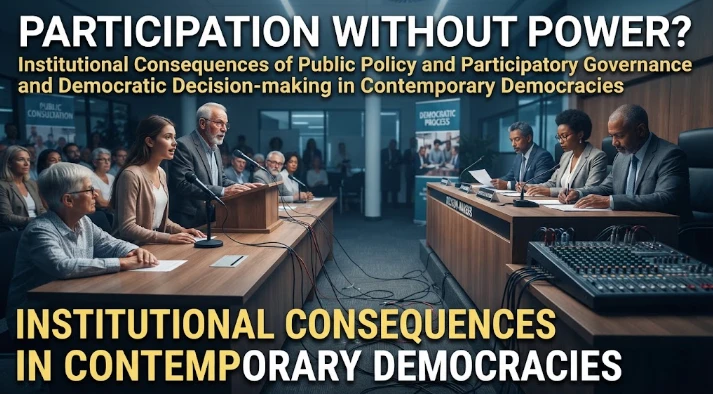
This article discusses the difference between public participation and meaningful political power in contemporary democracies. It describes how consultations, advisory councils, public hearings, community meetings, and digital platforms may increase visible participation without changing agenda control, budget authority, enforcement policy, or final decision-making power. The article mentions managed participation as a technique used in authoritarian and hybrid systems to collect information, di
This article presents policing and prosecution as important institutional sites for detecting democratic backsliding before formal constitutional breakdown occurs. It describes how political surveillance, selective enforcement, intimidation of lawful activists, aggressive crowd management, partisan charging decisions, and weak disciplinary systems may gradually alter political competition. The article mentions threats against election workers, judges, journalists, legislators, and local official
This article examines the distinction between documenting state repression and achieving meaningful accountability for human-rights violations. It describes how evidence may generate public visibility without producing legal remedies, institutional reform, or recognition for affected communities. The article mentions the importance of establishing dates, locations, responsible actors, chains of command, legal classifications, witness credibility, and preservation procedures. It also discusses ho
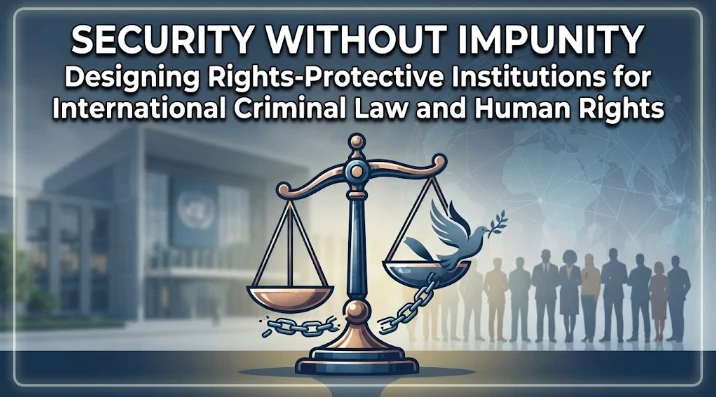
This article presents a rights-protective model of security governance that rejects the assumption that human rights and operational effectiveness are competing objectives. It describes how unchecked coercive power can reduce public cooperation, damage intelligence quality, encourage retaliation, conceal poor performance, and weaken institutional legitimacy. The article mentions clear mandates, documented authorization, independent oversight, accessible complaint procedures, and command responsi
This article examines state repression and public resistance as an evolving sequence of institutional interactions rather than isolated events. It describes how protests affect police planning, litigation changes administrative guidance, failed prosecutions influence evidentiary strategies, and public controversies alter political incentives. The article mentions that institutional learning can strengthen rights when misconduct produces reform, professional training, improved documentation, inde
This article examines whether formal compliance with international human-rights law produces genuine institutional change across multiple levels of governance. It describes how treaty ratification, reporting, legal reform, and monitoring may create procedural compliance without changing authority, budgets, enforcement practices, or access to remedies. The article mentions domestic mobilization as a central mechanism through which international commitments become meaningful. Courts, lawyers, legi
This article discusses how international human-rights institutions maintain authority when their decisions, procedures, and legitimacy are contested. It describes institutional authority as dependent not only on formal legal mandates but also on consent, expertise, impartial procedures, consistency, participation, transparency, and demonstrated problem-solving capacity. The article mentions that contestation does not automatically weaken legitimacy. Constructive disagreement may expose poor reas
This article examines legal integration as a political and institutional process through which international human-rights commitments become part of domestic governance. It describes the different roles played by constitutions, courts, legislatures, administrative agencies, civil society, and public opinion in determining whether international obligations influence everyday practice. The article mentions that similar treaty commitments may be incorporated through legislation, judicial interpreta
This article presents institutional learning as a central mechanism linking human rights, political conflict, state repression, and public resistance in the United States. It describes how protests, hate incidents, violent mobilization, policing disputes, litigation, and disciplinary processes create precedents and organizational memories that influence later behaviour. The article mentions that institutions may learn to exercise greater restraint through legal review, training, evidence standar
This article examines how conflict-related emergency governance may continue to affect human rights after formal emergency language or declarations have disappeared. It describes the persistence of surveillance systems, detention practices, procurement arrangements, delegated powers, interagency coordination, and broad threat classifications within ordinary administration. The article mentions legality, necessity, proportionality, non-discrimination, temporariness, parliamentary oversight, judic
This article describes the challenges of transforming conflict-related human-rights evidence into credible legal and political accountability. It explains that digital material may circulate rapidly while verification, chain-of-custody review, witness protection, legal classification, and attribution require careful and time-consuming processes. The article mentions the different standards and timelines followed by human-rights organizations, journalists, investigators, prosecutors, courts, poli
This article examines the governance consequences of integrating international human-rights law into domestic institutions and administrative practice. It describes legal integration as a process shaped by constitutions, courts, legislatures, agencies, political incentives, professional networks, and civil-society mobilization rather than a simple transfer of treaty language into national law. The article mentions that formal commitments may produce different results depending on domestic enforc
This article presents the institutional process through which international human-rights rules are translated into routine domestic administration. It describes how broad treaty obligations and monitoring recommendations must become agency forms, budgets, training manuals, software systems, professional standards, deadlines, complaint procedures, and review mechanisms. The article mentions frontline decisions by border officers, prison administrators, procurement teams, judges, schools, and serv
This article examines how international human-rights compliance may generate extensive institutional activity without producing substantive changes in power, behaviour, or access to remedies. It describes multilevel implementation as a sequence in which international institutions interpret standards, national governments adopt laws, agencies develop procedures, local authorities deliver services, and courts review disputes. Failure can occur at any stage. The article mentions reports, training p
This article presents comparative constitutional design as a framework for examining the risks created by emergency authority in the United States. It describes the constitutional paradox through which concentrated power may be necessary to protect public safety while simultaneously weakening safeguards against abuse. The article mentions legality, necessity, proportionality, temporariness, parliamentary control, judicial review, data governance, procurement oversight, and post-emergency audits
This article examines proportionality as a constitutional method for evaluating restrictions on fundamental rights during periods of institutional pressure. It describes proportionality as requiring a legitimate objective, a rational connection between the measure and that objective, consideration of less restrictive alternatives, and a balance between expected benefits and imposed burdens. The article mentions that proportionality becomes weak when courts accept official assertions without exam
This article discusses the difference between constitutional institutions that genuinely constrain power and those that merely communicate political disapproval. It describes how courts, legislatures, auditors, inspectors, federal institutions, civil servants, media organizations, and civil society may appear active during institutional stress without changing executive incentives or restoring affected rights. The article mentions timing, jurisdiction, access to evidence, enforceable remedies, c
This article presents a framework for protecting human-rights organizations while maintaining accountable and effective security institutions. It describes how advocacy groups may face surveillance, legal harassment, financial pressure, digital attacks, administrative restrictions, and physical threats while documenting abuse, supporting victims, litigating, and communicating publicly. The article mentions that rights-protective security requires clear authority, documented decisions, independen
This article examines how human-rights organizations and public authorities learn from repeated encounters involving protest, litigation, surveillance, fundraising, public communication, and political pressure in the United States. It describes institutional learning as potentially democratic or repressive. Misconduct may produce improved policy, documentation, oversight, training, and legal standards, while authorities may also develop more targeted surveillance, selective restrictions, and leg
This article examines how emergency governance can continue to restrict human-rights organizations after formal crisis measures have ended. It describes the long-term effects of surveillance systems, protest restrictions, registration rules, foreign-funding controls, data-sharing practices, emergency contracts, and administrative risk classifications. The article mentions that repealing a prominent emergency measure is insufficient when institutional residue remains embedded in ordinary procedur
This article examines how democratic recovery after executive overreach should be measured across institutions, time periods, and levels of government. It describes recovery as more than replacing a political leader, reversing a disputed order, or improving a national democracy score. Executive overreach may leave politicized appointments, weakened watchdogs, altered enforcement routines, intimidated civil servants, and declining public trust. The article mentions the need to measure institution
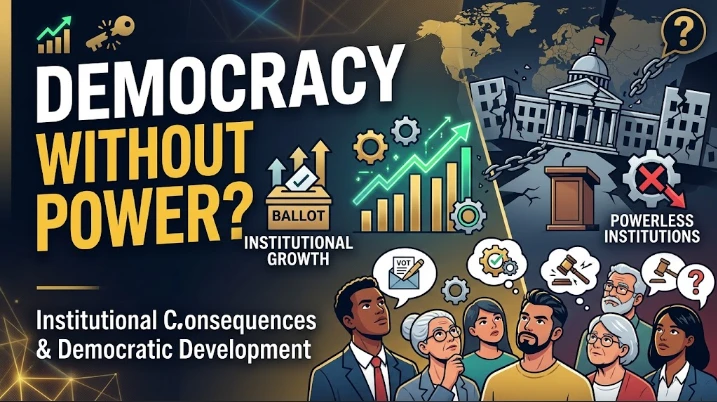
This article examines why rising levels of public participation do not necessarily indicate greater democratic power. It describes how consultations, hearings, citizen panels, advisory boards, and digital platforms may generate extensive public input while leaving agenda setting, information control, budgeting, and final decision-making unchanged. The article mentions tokenism, institutional capture, and isolation as common failures of democratic innovation. Meaningful participation requires tim
This article examines the gap between receiving a legally recognized refugee or migrant status and gaining practical access to everyday services. It describes how formal documentation does not automatically guarantee housing, employment, healthcare, education, banking, mobility, or social protection. The article mentions waiting periods, travel costs, language barriers, digital requirements, inconsistent agency rules, discrimination, and limited appeal procedures as factors shaping practical cit
This article presents digital identity as both an enabling infrastructure and a potential source of legal precarity within democratization and citizenship. It describes how digital credentials and biometric verification can improve portability, reduce duplication, and accelerate access to public services, humanitarian assistance, finance, and mobility. The article mentions that inaccurate records, failed biometric matches, inaccessible devices, vendor-controlled platforms, and opaque data-sharin
This article examines how emergency governance tests the relationship between democratic authority and constitutional limitations in the United States. It describes constitutional democracy as a combination of popular authorization and safeguards that preserve equal standing, lawful opposition, institutional review, and future political competition. The article mentions legality, necessity, proportionality, temporariness, parliamentary control, and judicial review as standards for preventing exc
This article examines how biometric border systems can create unequal experiences of citizenship and migration control in the United States. It describes facial recognition, fingerprinting, iris scanning, and interconnected identity databases as technologies that may improve verification and reduce fraud while also expanding surveillance and distributing errors unevenly. The article mentions false matches, failed identification, secondary inspection, questioning, detention, and weak appeal proce
This article presents proportionality as a practical framework connecting democratic theory, constitutional government, and the protection of fundamental rights. It describes proportionality as requiring public institutions to identify a legitimate objective, demonstrate that a restriction contributes to that objective, consider less restrictive alternatives, and balance the expected benefit against the imposed burden. The article mentions that proportionality becomes ineffective when courts acc
Political participation does not necessarily give citizens meaningful influence over government decisions. This article investigates how authoritarian and backsliding regimes may organize elections, consultations, advisory bodies, public meetings, petitions, and digital platforms while retaining control over agendas, budgets, appointments, implementation, and final outcomes. Such arrangements can produce participation without power, allowing institutions to gather information, identify oppositio
This article examines whether constitutional institutions genuinely constrain governmental power or merely communicate symbolic opposition during institutional stress. It describes courts, legislatures, inspectors, auditors, civil servants, federal institutions, media organizations, and civic groups as partial safeguards whose effectiveness depends on independence, capacity, access to information, timing, remedies, and compliance. The article mentions that judicial rulings and legislative invest
Political participation does not necessarily give citizens meaningful influence over government decisions. This article investigates how authoritarian and backsliding regimes may organize elections, consultations, advisory bodies, public meetings, petitions, and digital platforms while retaining control over agendas, budgets, appointments, implementation, and final outcomes. Such arrangements can produce participation without power, allowing institutions to gather information, identify oppositio
Restoring democracy after executive overreach should not mean returning unquestioningly to the institutional conditions that enabled the crisis. This article connects democratic recovery with democratic development, arguing that resilient institutions must combine constitutional restraint with effective and inclusive public service delivery. Courts, legislatures, electoral bodies, and watchdog institutions need independence and public support, while government agencies must provide reliable educ
This article examines why voters may express support for democracy while continuing to support candidates who weaken institutional openness, minority rights, or political contestability. It describes how polarization, party loyalty, policy preferences, elite signals, and perceptions of existential threat may reduce electoral punishment for democratic violations. The article mentions open-democracy theory as extending democratic evaluation beyond competitive elections to include inclusive deliber
Participation is frequently treated as evidence of democratic development, but attendance at meetings or completion of surveys does not demonstrate that citizens possess meaningful influence. This article distinguishes access—the opportunity to enter a meeting, election, hearing, platform, or consultation—from power, understood as the practical ability to shape agendas, budgets, appointments, implementation, and review. Governments and development organizations often report easily measured indic
This article presents democratic recovery after executive overreach as a process of reopening institutions rather than merely restoring formal legal boundaries. It describes how executive misconduct can leave politicized appointments, weakened oversight, restricted records, altered enforcement practices, intimidated officials, and concentrated agenda control. The article mentions open-democracy theory as requiring continuous accessibility, deliberation, transparency, inclusion, and responsivenes
International climate judgments can clarify legal duties quickly, but converting those principles into governance reform may take years. This article examines how climate rulings influence domestic legislation, administrative regulations, budgets, planning, permitting, monitoring, enforcement, and corporate investment. The 2024 International Tribunal for the Law of the Sea advisory opinion connected anthropogenic greenhouse-gas emissions with marine pollution under UNCLOS and emphasized duties t
This article examines how partisan loyalty and authoritarian political strategies influence voter tolerance of institutional erosion in the United States. It describes democratic backsliding as a gradual process involving selective enforcement, manipulation of appointments, attacks on institutional referees, pressure on information systems, and claims that exceptional action is necessary against political threats. The article mentions that authoritarian politics often operates through coalition
The green transition is not merely a technical shift from high-emission energy to cleaner alternatives. It redistributes land, employment, infrastructure, capital, environmental risk, and political authority, making it constitutional in a broader institutional sense. This article considers those distributional consequences in New Zealand, where climate policy intersects with coastal vulnerability, marine governance, regional inequality, Māori authority, natural-resource dependence, and Te Tiriti
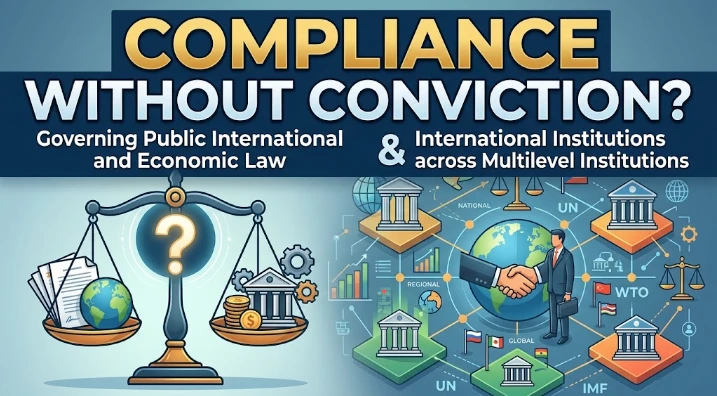
International institutions can generate extensive compliance activity without producing meaningful changes in conduct. Governments submit reports, create committees, adopt model legislation, participate in reviews, and repeat treaty language, while companies publish codes and implementation plans. This article asks whether those activities reflect genuine commitment or strategic efforts to protect reputation, diplomatic influence, and market access. International obligations move through several
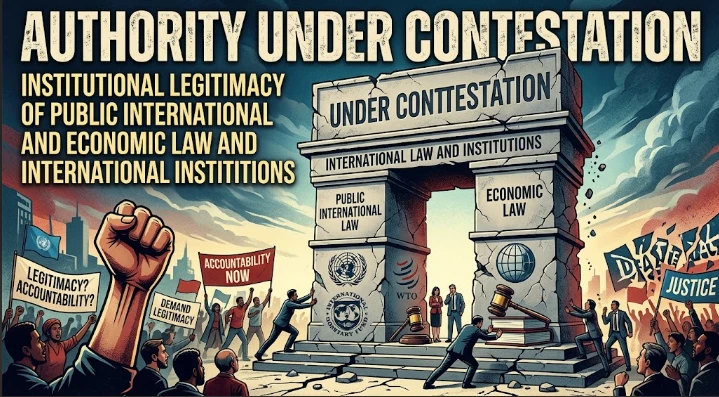
International institutions operate in an environment of incomplete consent, unequal power, and limited public trust. This article examines how such institutions establish and maintain legitimate authority when their decisions affect governments, businesses, communities, and individuals who may have little influence over negotiations. Legal mandates and state consent remain important, but they are insufficient when procedures are inaccessible, decisions appear selective, or affected groups cannot
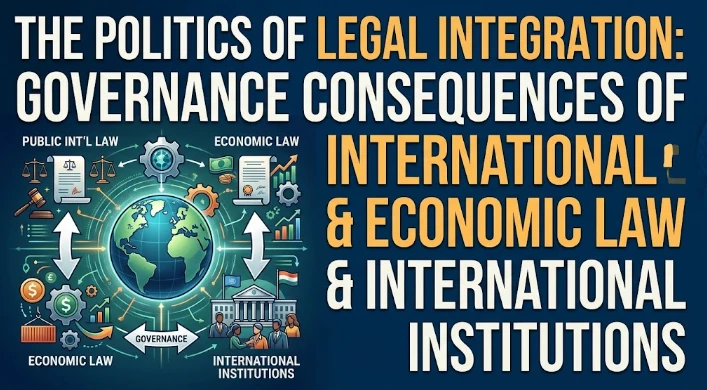
Integrating international legal and economic obligations into domestic governance is a political and institutional process, not a simple act of legislative adoption. This article examines how treaties, international standards, trade rules, and institutional decisions move through national legislatures, ministries, regulators, courts, local authorities, and private contracts. Different actors may reinterpret obligations according to political priorities, administrative resources, commercial inter
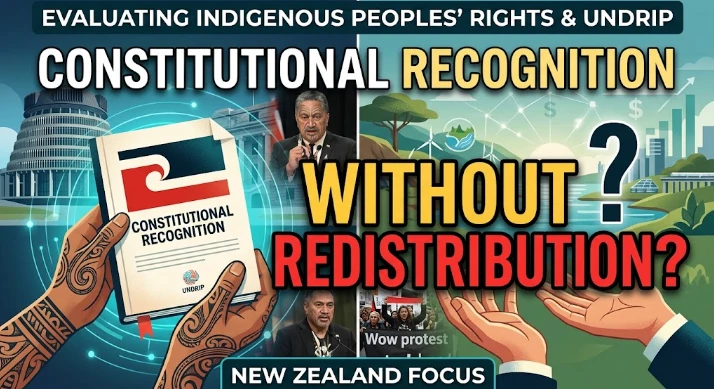
Formal recognition of Indigenous rights does not necessarily redistribute political authority, resources, or institutional influence. This article evaluates how Māori rights and the United Nations Declaration on the Rights of Indigenous Peoples can be translated into meaningful governance in New Zealand. Constitutional language, policy commitments, and consultation processes may acknowledge Indigenous status while leaving budgets, land decisions, service systems, and regulatory power under exclu
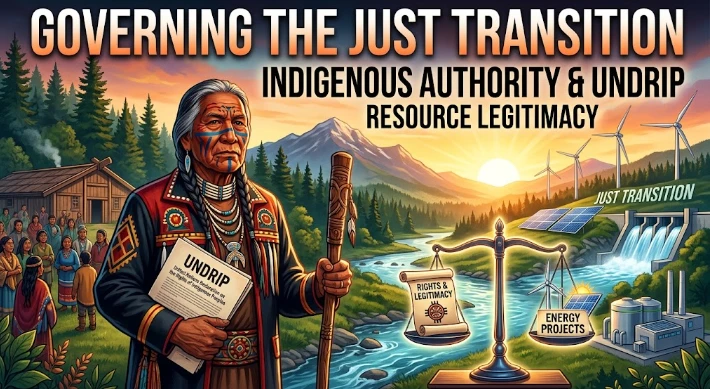
A just environmental transition cannot be achieved when Indigenous peoples bear local costs while governments and industries retain control over resources and benefits. This article examines the relationship between Māori authority, resource legitimacy, UNDRIP, and New Zealand’s transition toward a low-emission economy. Renewable energy, conservation, forestry, mining, coastal protection, and infrastructure projects can affect Indigenous land, cultural relationships, employment, and community de
The article argues that implementing UNDRIP requires moving beyond symbolic recognition toward durable systems of shared rule between states and Indigenous governments. It emphasizes legally recognized authority, practical jurisdiction, stable revenue, representation, co-governance mandates, Indigenous law, consent procedures, data governance, and community-controlled service delivery. Effective shared rule also depends on enforceable review, dispute resolution, political and technical intergove
The article examines how public international law on peace and security becomes effective only when international commitments are integrated into accountable domestic institutions. It focuses on constitutional authorization, parliamentary scrutiny, judicial review, sanctions administration, humanitarian-law implementation, security assistance, counterterrorism, federal coordination, private-sector delegation, and civil-society protections. The article argues that security secrecy must remain lim
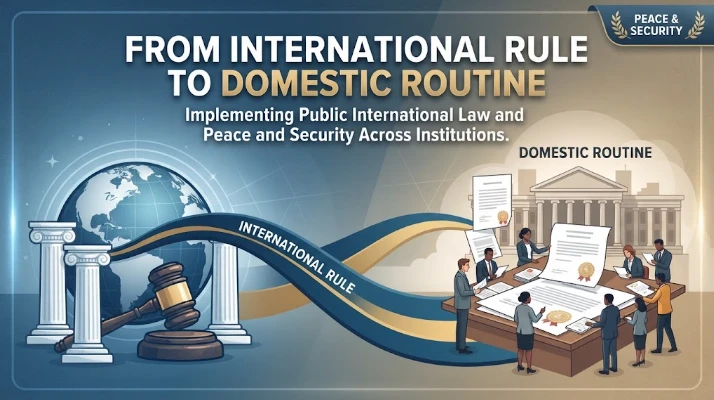
The article explains how international peace and security obligations must be translated from diplomatic commitments into ordinary domestic routines. It proposes mapping each obligation to legal authority, responsible agencies, implementation methods, information sources, training needs, monitoring bodies, and remedies. Legislation, administrative manuals, scenario-based training, humanitarian-law committees, procurement rules, secure data systems, judicial remedies, parliamentary scrutiny, loca
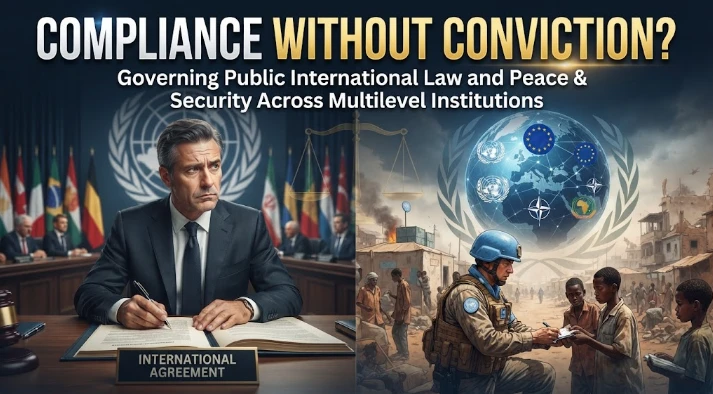
The article distinguishes formal compliance with international peace and security law from genuine institutional conviction. States may ratify treaties, enact laws, create committees, and train personnel while still applying rules selectively, underfunding implementation, or avoiding constraints when strategic interests are involved. The article uses sanctions, military operations, security assistance, private-sector delegation, civil-society space, parliamentary scrutiny, international review,
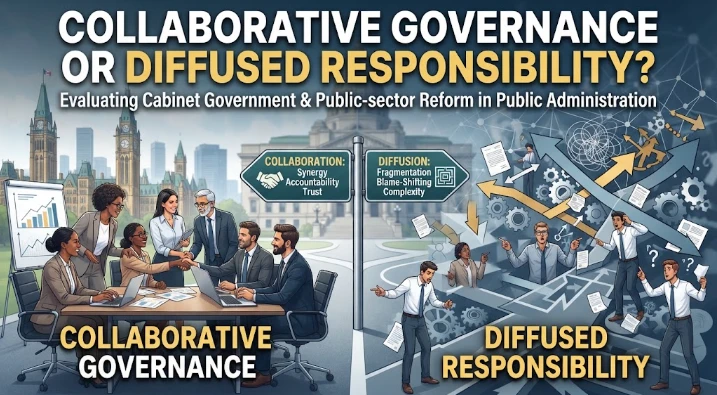
The article evaluates whether collaborative governance in public administration improves coordination or instead diffuses responsibility. Using Cabinet government and cross-agency reform as the setting, it argues that collaboration requires clear mandates, decision rights, budgets, reporting lines, lead ministers, lead executives, and dispute mechanisms. Shared programs need secretariats, data governance, community participation, accountable contracting, parliamentary scrutiny, audit, and preser
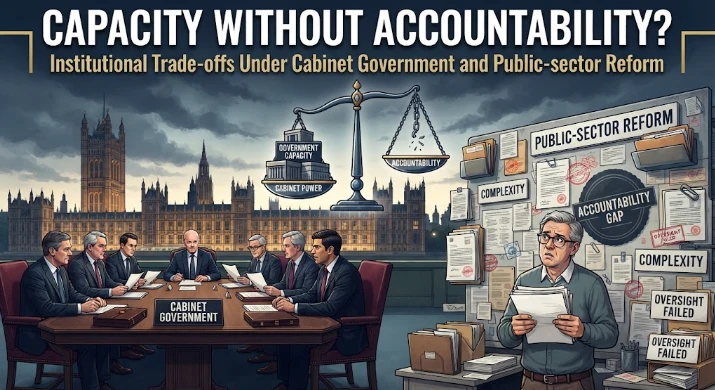
The article explores the trade-off between increasing public-sector capacity and preserving accountability under Cabinet government and reform. It identifies capacity as a combination of expertise, information, legal authority, resources, coordination, institutional memory, and adaptability. Centralization, shared services, outsourcing, digital systems, workforce restructuring, flexible budgets, and cross-agency bodies may improve delivery but can also weaken traceability, local knowledge, profe
The article proposes a rights-protective institutional model for security at the intersection of international political sociology and international criminal law. It argues that security threats are socially produced through institutional classifications, while criminal law demands traceable individual responsibility, evidence, and links between action and authority. Effective protection therefore requires records, layered scrutiny of secrecy, balanced command incentives, independent complaints,
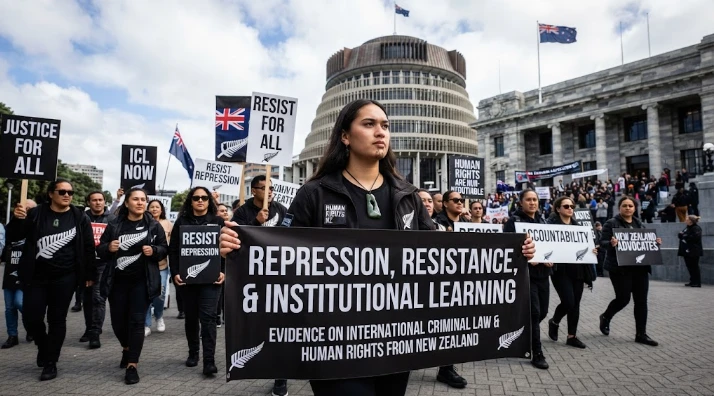
The article examines repression, resistance, and institutional learning in New Zealand through policing, public-order law, rights protections, and international criminal-law principles. It argues that coercive harm often arises through accumulated routines, incentives, classifications, and omissions rather than one dramatic decision. The article focuses on how Police, courts, local authorities, protest groups, Māori institutions, journalists, and oversight bodies define threats, preserve evidenc
The article analyzes the long-term rights effects of emergency governance after a crisis ends. It warns that temporary powers can persist through databases, surveillance practices, procurement contracts, police routines, mobility controls, and administrative habits even after the formal emergency is over. The proposed institutional response combines criminal-law legality, human-rights limits, emergency doctrine, ordinary judicial review, and oversight by executives, emergency agencies, police, i
The article examines how administrative design can either protect or exclude people displaced by conflict. It argues that humanitarian and refugee-law commitments are weakened when registration, eligibility, documentation, language, geography, digital access, or fragmented service systems prevent people from receiving protection. Because conflict often destroys identity, school, medical, and property records, the article supports reasonable evidentiary flexibility, corroboration, interviews, and
The article examines digital identity systems used during displacement and conflict, focusing on the tension between service access and risks of surveillance, exclusion, and persistent data sharing. It brings together humanitarian data protection, privacy law, refugee protection, and New Zealand’s digital identity framework while emphasizing the responsibilities of displaced persons, identity providers, humanitarian organizations, states, border agencies, service providers, and regulators. The a
The article argues that a just transition requires Māori authority over environmental and resource decisions rather than merely transferring climate or development costs to Māori communities. Its framework combines Te Tiriti o Waitangi, UNDRIP, environmental law, youth-justice obligations, and tikanga-informed governance. It emphasizes early Māori involvement, shared decision-making, stable funding, data sovereignty, tikanga-based processes, benefit agreements, cumulative-impact assessment, and
The article examines how Māori legal recognition can be converted into shared rule across state, justice, care, and community institutions. It argues that formal recognition remains limited when the state retains unilateral control over budgets, jurisdiction, appointments, and enforcement. A stronger model combines Te Tiriti relationships, UNDRIP self-determination, tikanga Māori, youth-justice responsibilities, delegated jurisdiction, co-commissioning, shared appointments, data sovereignty, sta
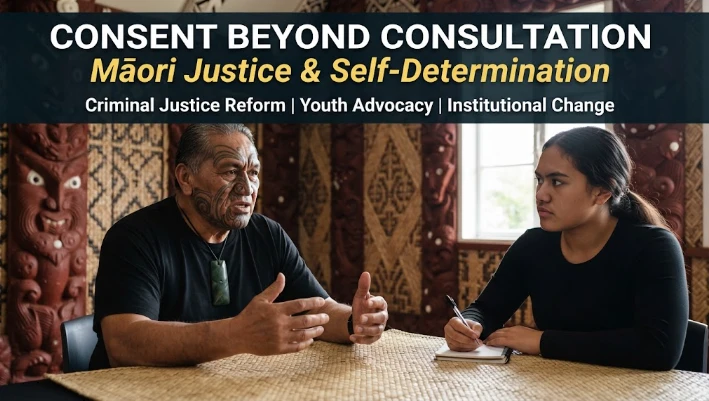
The article distinguishes meaningful Indigenous consent from consultation processes controlled by state institutions. It argues that consultation becomes procedural when government determines timing, available options, information, resources, and the final decision. Drawing on UNDRIP, Te Tiriti obligations, administrative fairness, tikanga Māori, and youth-justice principles, it proposes agenda-setting power, independent advice, sufficient time, transparent alternatives, negotiated authority, an
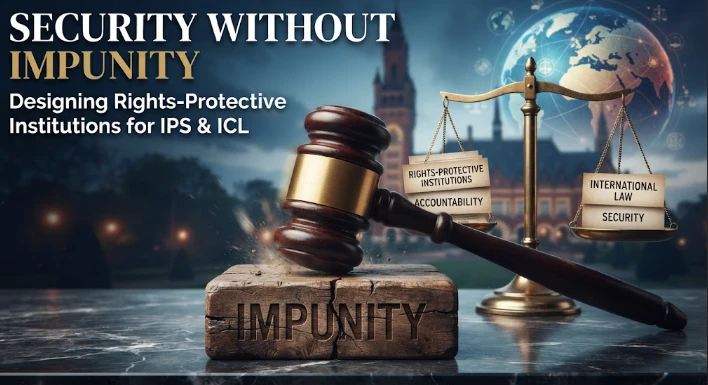
The article argues that security institutions must prevent impunity by embedding human-rights and international criminal-law constraints into everyday operations. It focuses on crimes, torture prohibition, fair-trial rights, command responsibility, domestic oversight, and the roles of military commanders, police, intelligence agencies, prosecutors, courts, detention monitors, and human-rights bodies. Proposed safeguards include clear rules of engagement, detention registers, independent monitori
The article examines how New Zealand institutions can learn from repression, resistance, and rights violations that may fall below the threshold of international crimes but still damage democratic participation. It brings together international human-rights obligations, accountability norms, the New Zealand Bill of Rights Act, the Crimes of Torture Act, and policing law. The proposed reform model relies on independent review, disaggregated reporting, legal remedy, public hearings, operational re
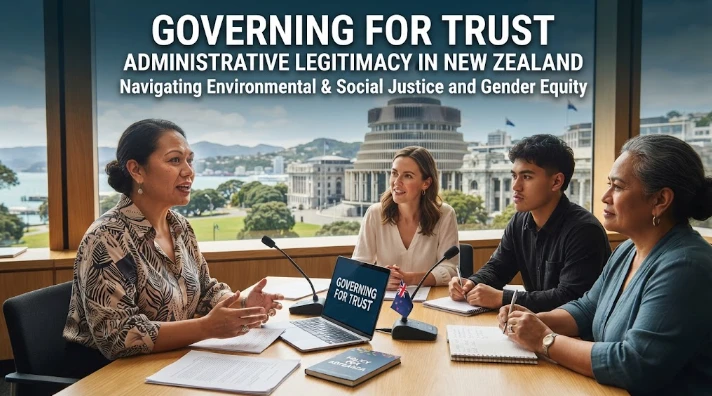
The article examines administrative legitimacy in New Zealand through environmental and social justice and gender. It argues that trust erodes when environmental burdens, public benefits, participation, and remedies are distributed unequally by gender, income, ethnicity, disability, or place. Public value is therefore broader than efficiency and includes environmental quality, equal treatment, democratic voice, cultural integrity, trust, and long-term stewardship. The article connects Public Ser
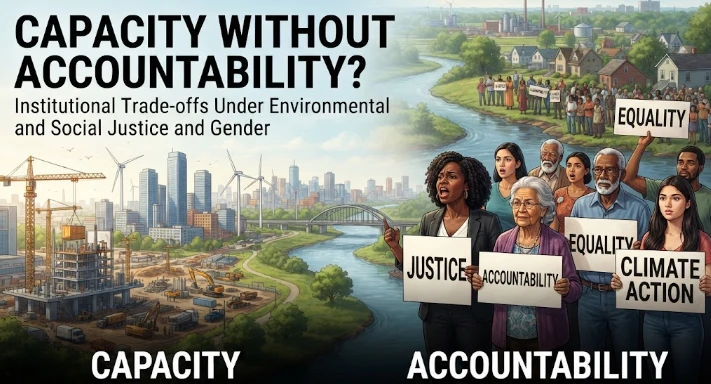
The article analyzes how reforms intended to increase administrative capacity can weaken accountability in environmental and social policy. Centralization, outsourcing, emergency delivery, automation, and contracting may increase speed and expertise while obscuring responsibility, local knowledge, equity effects, and public review. The proposed governance framework combines public-service principles, procurement rules, privacy, anti-discrimination law, and environmental responsibility. Practical
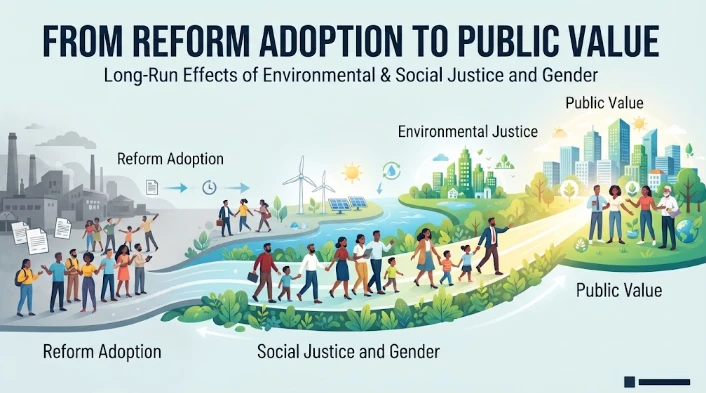
The article evaluates public-sector reform over the long run by asking whether adopted changes generate durable public value across environmental, social, and gender dimensions. It defines public value as more than efficiency, incorporating environmental quality, equal treatment, democratic voice, cultural integrity, trust, wellbeing, and intergenerational stewardship. The article calls for long-term monitoring, public dashboards, community-defined indicators, independent review, and adaptive co
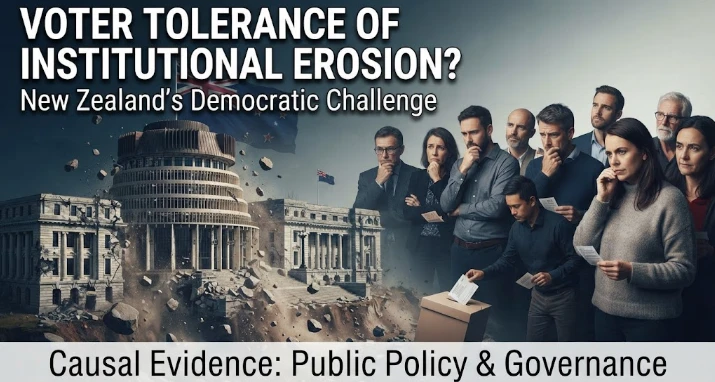
The article examines why voters may support democratic principles yet tolerate institutional violations when those violations benefit preferred parties or policies. In New Zealand, it places this problem within electoral law, parliamentary accountability, local participation, rights protections, and public-service neutrality. The article argues that participatory governance must be designed for representative access, reason-giving, balanced deliberation, and visible influence rather than simple
The article explores how democracies can recover institutionally after executive overreach rather than relying on electoral turnover alone. It argues that weakened oversight, participation, administrative impartiality, and public trust can persist after officeholders change. Recovery therefore requires constitutional conventions, parliamentary scrutiny, open-government duties, electoral safeguards, public-service principles, judicial review, independent appointments, and renewed disclosure chann
The article asks when participation has real institutional power rather than merely collecting opinions. It argues that democratic participation becomes meaningful when citizens can influence agendas, budgets, representation, final decisions, and review processes. Effective design requires representative recruitment, support for unequal access, reason-giving by authorities, balanced deliberation, clear mandates, participatory budgeting, feedback duties, and formal review of rejected recommendati
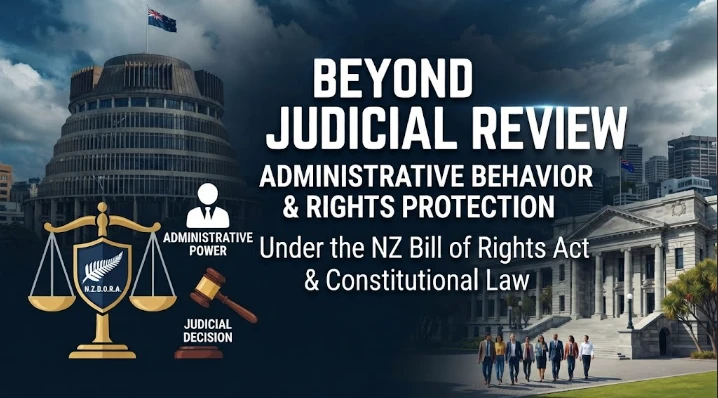
The article argues that rights protection under the New Zealand Bill of Rights Act depends on administrative behavior as much as judicial review. Court decisions cannot secure rights if frontline rules, budgets, data systems, operational guidance, and organizational incentives produce unlawful or unfair outcomes. The article links Bill of Rights protections, section 7 vetting, administrative fairness, public-service obligations, parliamentary scrutiny, internal review, ombuds oversight, complain
The article argues that rights protection under the New Zealand Bill of Rights Act depends on administrative behavior as much as judicial review. Court decisions cannot secure rights if frontline rules, budgets, data systems, operational guidance, and organizational incentives produce unlawful or unfair outcomes. The article links Bill of Rights protections, section 7 vetting, administrative fairness, public-service obligations, parliamentary scrutiny, internal review, ombuds oversight, complain
This article presents a connection between democracy measurement and causal evidence on voter tolerance of institutional erosion in the United States. It describes how democracy indices can identify changes in electoral competition, judicial independence, civil liberties, media freedom, participation, and administrative neutrality, but cannot independently determine whether voters will punish political leaders for democratic violations. The article mentions survey experiments as a method for tes
Recognised as a member of the Chittagong District Bar Association following enrollment with the Bangladesh Bar Council on 25 September 2021. Lawyer Identification Number: 2021096502.
2025 – Present
Senior Associate
Legal Sanctity, Dhaka (November 2025 – Present)
Handle criminal, civil, human rights, and corporate legal matters. Conduct legal research, prepare case strategies, draft pleadings and legal notices, provide client consultation, represent clients in court, negotiate disputes, supervise junior associates, and review legal documents for regulatory compliance.
2024 – 2025
Assistant Manager
Rangs Properties Limited, Dhaka (July 2024 – October 2025)
Provided legal advice and operational support on business development matters. Addressed legal complexities affecting company operations and assisted management with practical, compliance-focused solutions.
2022 – 2024
Senior Executive, Legal
Rangs Properties Limited, Dhaka (September 2022 – June 2024)
Managed land mutation, land registration, legal vetting, and property-related documentation. Represented the company in legal matters, prepared legal opinions and agreements, and supported negotiation and dispute-resolution processes.
2022
Senior Executive, Legal
Building Technology & Ideas Ltd., Dhaka (June 2022 – September 2022)
Handled and represented legal suits, prepared legal opinions, drafted agreements, reviewed legal documents, and supported dispute-resolution activities.
2021 – 2022
Building Technology & Ideas Ltd., Gulshan
February 2021 – June 2022 (February 2021 – June 2022)
Managed legal suits, prepared legal opinions, drafted and vetted legal documents, facilitated apartment registration within required timelines, and maintained liaison with relevant registration offices.
2019 – 2021
Legal Executive
Vivek Real Estate Limited, Dhaka (January 2019 – February 2021)
Prepared legal drafts, deed agreements, reminder letters, and formal legal correspondence. Responded to legal inquiries, coordinated with panel lawyers, maintained confidential legal records, and assisted with employee income-tax documentation.
Assisted senior lawyers with case preparation, legal drafting, documentation, and court files. Handled matters under Section 145 of the Code of Criminal Procedure before the Executive Magistrate Court, supported AC Land Office matters, and maintained daily case records.
2018
Master of Laws (LL.M.) in Human Rights
Chittagong Independent University (2017 – 2018)
Completed a Master of Laws specialising in Human Rights with a CGPA of 3.48 out of 4.00. Coursework included Human Rights, Intellectual Property Law, International Economic Law, International Humanitarian Law, International Trade Law and Arbitration, Criminology, and Legal Research Methodology.
2017
Bachelor of Laws (Honours)
Premier University, Chattogram (2013–2017)
Completed a four-year Bachelor of Laws (Honours) degree with a CGPA of 3.41 out of 4.00 and 120 academic credits. Studied constitutional law, criminal law, civil procedure, international law, company law, environmental law, property law, evidence, taxation, labour law, and legal drafting.
2012
Higher Secondary Certificate in Business Studies
Government College of Commerce, Chattogram (2010 – 2012)
Completed the Higher Secondary Certificate examination in Business Studies with a GPA of 4.40 out of 5.00. Key subjects included Accounting, Principles of Business and Practice, Economics and Commercial Geography, Computer Studies, English, and Bengali.
2010
Secondary School Certificate in Business Studies
Eastern Refinery High School (2008 – 2010)
Completed the Secondary School Certificate examination in Business Studies with a GPA of 4.88 out of 5.00. Key subjects included Accounting, Introduction to Business, Business Entrepreneurship, Economics, Mathematics, General Science, English, and Bengali.
Let's Connect
Available for research collaborations, speaking engagements, and consulting on AI ethics frameworks.